Minister of Labour, Employment and Social Security Chairs Opening of Training Day for Labour Inspectors on Preventing and Combating Corruption
THE 22 June 2026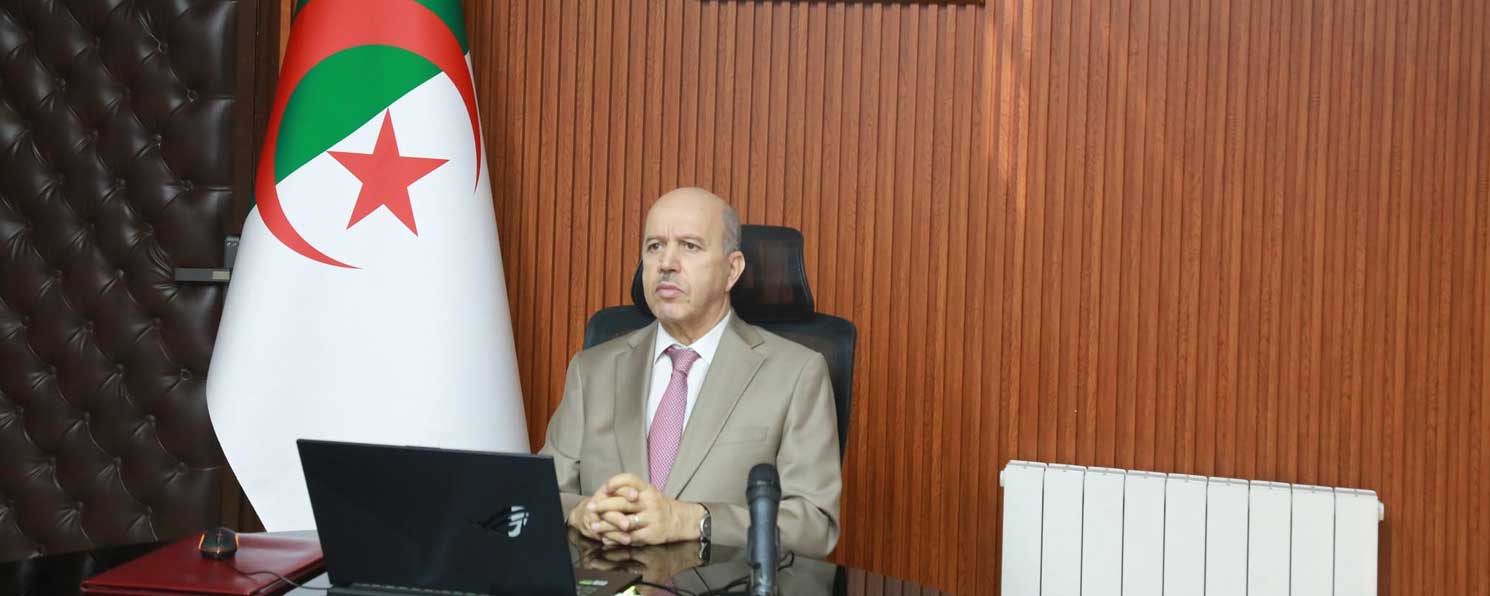
The Minister of Labour, Employment and Social Security, Mr. Abdelhak Saihi, chaired, on Monday, 22 June 2026, at the Ministry’s headquarters and via videoconference, the opening of a training day dedicated to labour inspectors on the prevention of and fight against corruption, organised in coordination with the High Authority for Transparency, Prevention and Combating Corruption.
In his opening address, the Minister stressed that the organisation of this event is part of the implementation of the high-level orientations of the President of the Republic aimed at upholding the principles of integrity and transparency, promoting ethical standards in public services, and building a modern, effective and citizen-centred administration.
The Minister also highlighted that, in recent years, the Algerian State has strengthened its legal and institutional framework through a series of reforms and mechanisms aimed at enhancing transparency and accountability and protecting public funds. He noted that these efforts culminated in Algeria’s exit from the Financial Action Task Force (FATF) grey list, which constitutes international recognition of the effectiveness of the measures adopted by the State in the field of preventing and combating corruption and strengthening control and compliance mechanisms.
He added that this achievement reflects the State’s strong political will and the collective mobilisation of the various national institutions, while also demonstrating the progress made by Algeria in the field of good governance and in strengthening confidence in its institutions.
The Minister further stressed that preventing corruption is not the responsibility of any single institution or sector, but rather a collective responsibility requiring the contribution of all stakeholders. He highlighted the central role of the labour inspector as a representative of State authority on the ground and as a guarantor of compliance with labour and social security legislation and regulations, as well as the protection of workers’ and enterprises’ rights.
He went on to emphasise that the integrity and probity of labour inspectors are fundamental to the successful performance of their duties and a source of credibility for the labour inspection system. He called on labour inspectors to demonstrate the highest levels of vigilance, impartiality and commitment to professional ethics and codes of conduct, thereby strengthening confidence in public services and contributing to a culture of transparency in the world of work.
The Minister explained that this training day aims to strengthen the legal and professional knowledge of labour inspectors in the field of preventing and combating corruption and to familiarise them with the various legal mechanisms adopted at the national level. This, he noted, will contribute to enhancing their performance and the effectiveness of their field interventions.
He also commended the central role played by the High Authority for Transparency, Prevention and Combating Corruption in supporting the sector in the field of training, describing this contribution as a valuable initiative that will strengthen the field performance of labour inspectors and consolidate a culture of integrity and corruption prevention, with a positive impact on the transparency and effectiveness of public service management, in the service of Algeria, its institutions and its citizens.
For her part, the President of the High Authority for Transparency, Prevention and Combating Corruption commended the efforts made by the Ministry of Labour, Employment and Social Security to uphold the principles of integrity and transparency across its various programmes and activities. She considered the training initiative to be evidence of institutional awareness of the importance of corruption prevention as a key mechanism for protecting public services and strengthening confidence in institutions.
She also praised the Ministry’s participation in various national initiatives aimed at strengthening integrity and good governance, particularly through its contribution to the implementation of the Integrity Index and the promotion of a culture of prevention within its administrative structures. She reaffirmed the High Authority’s readiness to continue supporting the sector through training and awareness programmes, the exchange of expertise and the strengthening of control mechanisms.
She further affirmed that Algeria’s removal from the Financial Action Task Force (FATF) grey list represents the culmination of the far-reaching reforms undertaken by the State in recent years and the direct result of the concerted efforts of various national institutions and bodies to align the national framework with relevant international standards on transparency, integrity and combating corruption.
It should be noted that this training day addressed a number of topics relating to the legal and institutional framework for preventing and combating corruption, mechanisms for strengthening integrity and transparency in the performance of supervisory duties, and best practices for protecting public services. The event saw broad participation by labour inspectors from across the country, as part of ongoing efforts to strengthen their professional capacities and support them in carrying out their important duties in the service of the national economy and the protection of workers’ and enterprises’ rights.


